Monthly Archives: September 2009

Why Do So Many ATS Vendors Offer Poor Search Capability?

JIT Talent IdentificationThis question has been burning in my mind for quite some time – why is it that so many ATS/recruiting CRM vendors offer poor or limited candidate search functionality? I’m not talking about ATS vendors you’ve never heard of – I’m talking about some of the biggest names in Applicant Tracking/Candidate Relationship Management applications.

I’m well aware that ATS’s serve many critical functions beyond searching for the candidates contained within them, but let’s pull no punches here – you can’t hire someone, or begin to automate candidate relationship management with someone you haven’t FOUND in the first place. And just because a candidate is buried somewhere in your database, it doesn’t mean you’ve actually found them (or can find them when you want or need to).

The bottom line is that data is of little to no value if you can’t retrieve the information you want, when you need it. What is the point of storing human capital data if you can’t precisely retrieve exactly what you want, when you want it? Continue reading


U.S. Visitors to Facebook Declines in August

Facebook_LinkedIn_Twitter_August_09_Traffic_DataI’ve been making a habit of posting the U.S. traffic data for the “big 3” social media sites (Facebook, LinkedIn, Twitter – the ones that seem to matter most to sourcers and recruiters) on a monthly basis.

Last month, I predicted that all 3 of the sites would experience a decline in monthly unique U.S. visitors, and as it turns out, I was right only about 1 of them.

And I was quite surprised to see which one it was. Continue reading

Google Search: The Asterisk Wildcard and Punctuation

Google_Search_Masters by by renatotarga via creative commons_BW_invert

Think you know all there is to know about Google search?

I was recently asked a question regarding the use of the asterisk when searching on Google, specifically in conjunction with certain punctuation.

This person was under the impression that if you used the equal sign on either side of an asterisk when searching Google, it would function as a multiple word wildcard operator. For example, searching for [linux=*=administrator] should return results of linux system administrator, linux systems administrator, linux network administrator, linux server administrator, etc.

The short answer is that Google ignores most punctuation, and that there is no need to combine the asterisk with any other punctuation or symbols for it to perform as a single or multiple word wildcard.

The long answer is much more interesting. I decided to perform some experiments with Google’s wildcard asterisk and I uncovered a few oddities and unsolved mysteries. I’m curious if you might be able to shed some light on them. But first, I will show you exactly how you can make good use of Google’s asterisk when searching for resumes on the Internet, as well as when X-Ray searching LinkedIn and Twitter.  Continue reading

How to Bulk-Accept LinkedIn Invitations to Connect

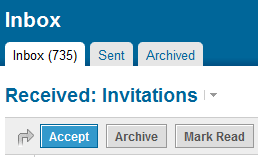
LinkedIn_Bulk_Invitation_Accept_0LinkedIn has been making changes to their interface and one thing I noticed back in March is that I could no longer select multiple invitations to connect and accept them all at once from the main inbox page.

It took a little bit of exploring the new inbox interface and functionality before I figured out how to be able to bulk accept LinkedIn invites like I had grown accustomed to. Then the other day I was on Twitter and I had made a comment about bulk accepting LinkedIn invites and received a number of responses from people asking how to do it.

I had assumed everyone knew how to select and accept multiple invitations to connect – but you know what they say about assumptions…

So – I’m here to show you 2 different ways of bulk accepting invitations to connect on LinkedIn. Continue reading